
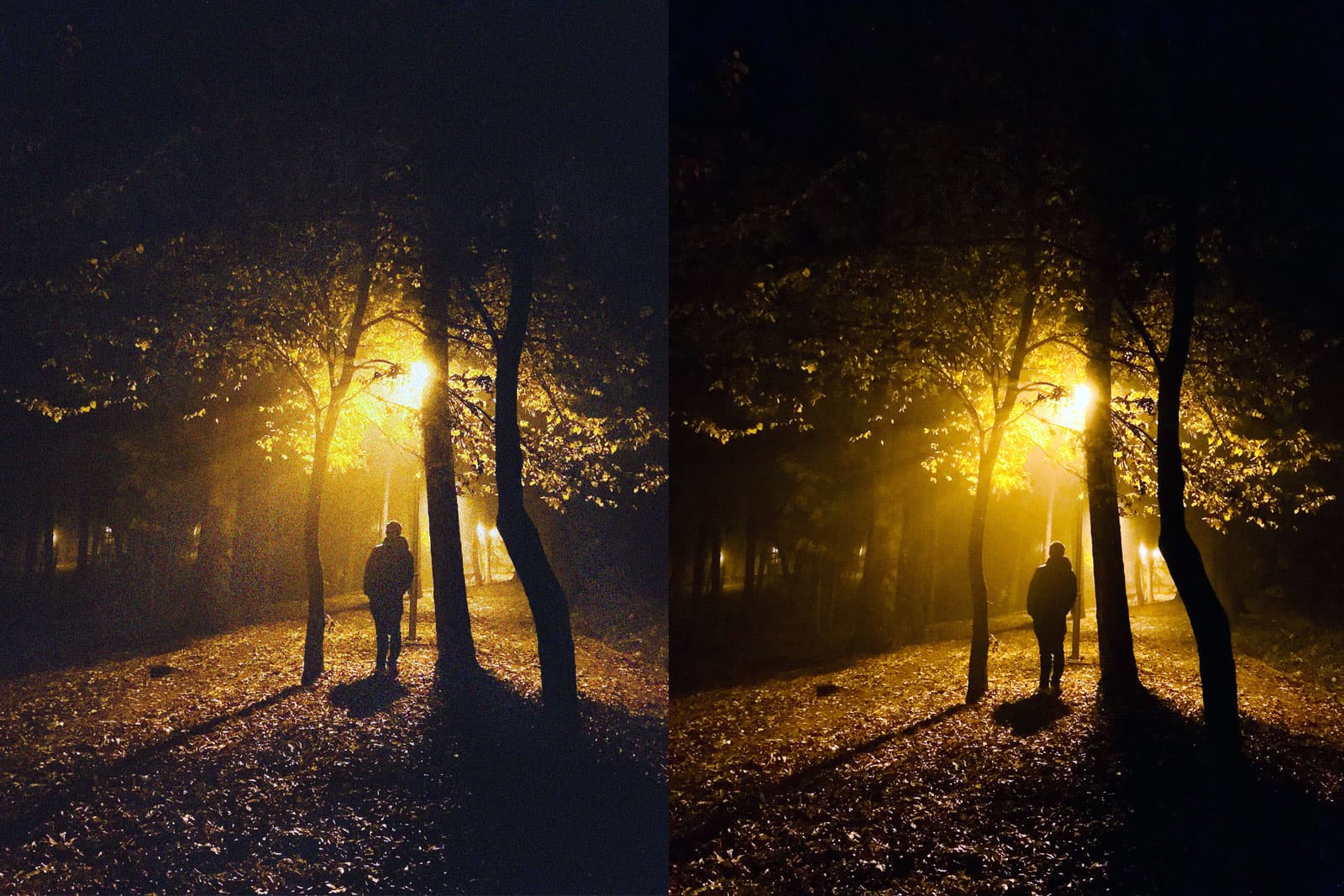
Color noise and grain are traditionally considered problems that photographers should eliminate. Camera manufacturers have been refining noise reduction algorithms for years, and training materials advise shooting “as cleanly as possible.” But in real-world photography, noise has long since moved beyond a sterile image. In street, documentary, and portrait photography, noise is increasingly being used consciously—as an expressive technique that adds depth, tension, and a sense of presence. When approached thoughtfully, this technical “imperfection” becomes an artistic tool.
What’s the fundamental difference between noise and grain?
Grain is a visual effect familiar from film photography, associated with silver crystals. It has an organic, structured appearance and is often perceived as “warm.” Chroma noise is a digital artifact that appears as multicolored speckles, especially in shadows and at high ISOs.
In practice, grain is often added intentionally during post-processing, whereas chroma noise occurs naturally. However, in some genres, chroma noise enhances the sense of night, artificial light, and a tense environment. It emphasizes a scene’s instability, making the image less glossy and more “alive.”

When noise enhances atmosphere
Color noise is especially noticeable in scenes with artificial lighting, such as neon, incandescent, and sodium-vapor lamps. These already distort color, and noise enhances this effect. Evening streets, bar interiors, night portraits, and backstage footage are all winning scenarios.
That’s why a similar visual aesthetic appears in promotional materials for live venues, nighttime events, and even broadcasts where atmosphere is more important than perfect image clarity. On the website, Portuguese players can choose an atmospheric European casino with warm lighting, shadows, and movement that draw and hold the viewer’s attention. In this case, noise does not interfere; it enhances the experience.
Camera Settings for Controlled Noise
To make noise look impressive, it needs to be controlled. Basic shooting recommendations:
- ISO: 3200–6400 — the optimal range for noticeable but manageable noise on modern cameras
- Aperture: f/1.8 – f/2.8 to preserve detail and avoid being lost in darkness
- Shutter Speed: 1/60 – 1/125 for portraits, 1/30 is acceptable for static scenes
- White Balance: fixed (e.g., 3200K or 4000K) to prevent noise from “jumping” between colors
- Format: RAW — mandatory, otherwise, color noise will be difficult to correct
Important: Disable aggressive noise reduction in your camera. It “eats” texture and makes noise appear muddy rather than expressive.
Post-processing
In Lightroom or Capture One, don’t remove color noise entirely. It’s better to reduce it to a level that preserves texture but eliminates large color spots. A practical approach:
- Color Noise Reduction: 15–30
- Luminance Noise Reduction: minimal, 0–10
- Add grain: only if the original noise is too “digita.l”
- Local shadow adjustments, not global anti-aliasing
This preserves the atmosphere and avoids plastic-like skin and blurry shadows.
Why a sterile image often fails
Overly clean images quickly become boring. They look the same, lack context, and fail to convey a sense of time and place. Noise, on the other hand, captures the environment: a cold night, a warm interior, movement, tension. It makes the photograph less universal but more honest.
Working consciously with noise requires taste and practice, but it gives the photographer more expressive tools than chasing perfect sharpness. Sometimes it’s imperfection that makes a photograph memorable.
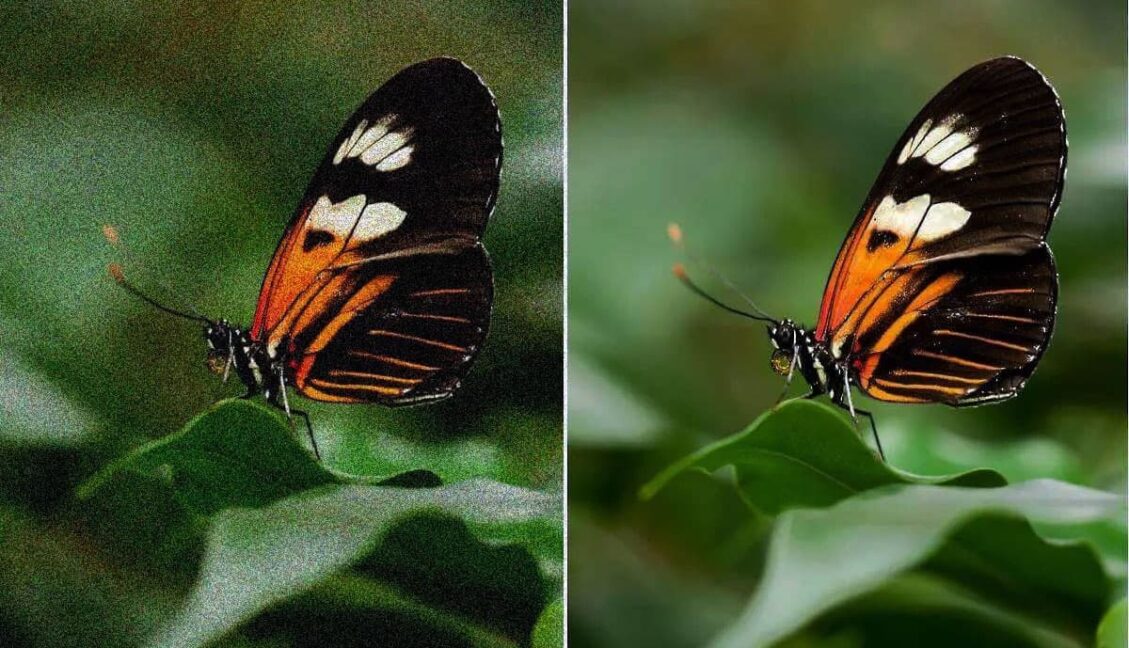
The Best Cameras for Working with Noise
In certain genres—street photography, low-light portraits, black-and-white atmospherics—noise adds character, emotion, and texture that a clean, sterile image lacks. Below are specific cameras, examples of their “beautiful” noise, and practical settings.
Sony α7 III / α7R IV: Tonal Depth and Controlled Noise
The Sony α7 series is known for its dynamic range. Full-frame BSI-CMOS sensors produce clean shadows up to ISO 6400, but noise becomes noticeable above that. These cameras produce noise that’s not just “grain,” but a soft-edged granularity—when processed correctly, it enhances the atmosphere. Basic settings for “artistic” noise on Sony:
- ISO: 3200–6400—here, noise is still controlled, but clearly visible.
- Profile: Creative Style profile: Portrait / Neutral with a contrast of -1 or -2 (reduces the aggressiveness of lines).
- NR (Noise Reduction): Off or Low—to preserve texture.
- Post: Subtle grain enhancement via Sony Imaging Edge / Lightroom—subtly accentuates noise.
In low light, Sony produces noise that often looks more natural than the aggressive digital noise of other cameras. This is especially noticeable in night street scenes and portraits with bokeh.
Fujifilm X-T4 / X-Pro3: Grain as Part of Film Aesthetics
Fujifilm has been simulating film for years, and its cameras do this at the hardware level. The Acros / Classic Chrome / Eterna series are more than just profiles; they offer a color response and noise character that resemble film grain. Tips for working with noise on Fujifilm:
- Film Simulation: Acros (B&W) creates a “beautiful grain” reminiscent of black-and-white film.
- Highlight/Shadow Tone: -1 / -2 for smoother transitions.
- Grain Effect: Strong — the menu has a dedicated grain parameter that adds structure without breaking the image.
- ISO: 1600–3200 — the optimal range for preserving detail with characteristic noise.
Fuji’s film simulations make noise feel like an artistic choice rather than an artifact.
Canon EOS R6 / EOS 5D Mark IV: Smooth Grain and Skin Tones
Canon’s color processing algorithms have always emphasized natural skin tones. On the EOS R6 (and older full-frame cameras), noise at ISO 3200–12800 appears “velvety”: it’s soft, with muted colors, and doesn’t produce strong color artifacts. Settings worth trying:
- Picture Style: Neutral or Faithful — minimal processing aggressiveness.
- High ISO Noise Reduction: Low — to preserve texture.
- ISO: 3200–12800 for night scenes and street portraits.
- Exposure Compensation: +0.3 — helps keep shadows closer to detail.
A distinctive feature of Canon is that color noise is much less noticeable than high-contrast luminance noise, and it